
Wet Underfloor Heating vs Electric Underfloor Heating: A Comprehensive Comparison
Understanding Underfloor Heating Systems
Find the right products for your project
Browse our range of kits, components and accessories to find the best fit for your installation.
Underfloor heating systems are gaining popularity for their efficient heating capabilities and comfort. When choosing a system, it’s essential to compare different types carefully, such as wet underfloor heating vs electric. Each system has its own merits, making it crucial to understand their differences to select the best option for your home.
Understanding the mechanics behind underfloor heating systems can significantly influence your choice. Wet systems operate on a central heating principle, making them a great candidate for homes with existing central heating methods. In such scenarios, they can leverage existing infrastructure, potentially lowering installation costs. On the other hand, electric systems provide greater flexibility in terms of zoning. For instance, you can easily heat a bathroom or a small kitchen independently from the rest of the house, allowing for tailored comfort and efficiency.
Moreover, climate considerations play a vital role in your decision. Areas with milder winters may not require the robust heating provided by wet systems, making electric options a sufficient and cost-effective solution. In contrast, homes in colder regions may benefit more from the thermal mass of wet systems, which can retain heat longer. Understanding your local weather patterns and how they relate to heating needs can help guide your choice.
Lastly, it’s worth noting that maintenance differs between systems. Wet systems may require regular checks on the boiler and pipework to ensure efficiency, while electric systems often have fewer maintenance demands due to their straightforward nature. Thus, the long-term upkeep should also factor into your decision-making process.
Quick Overview
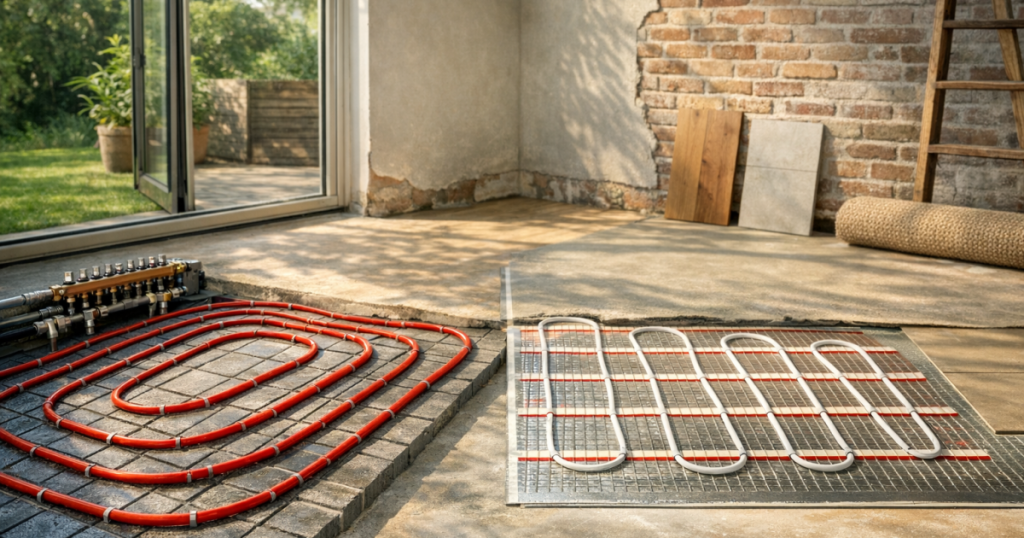
Wet and electric underfloor heating both serve the same purpose—heating a space from the ground up—but they operate on different principles and have distinct benefits. Wet systems circulate warm water through pipes, while electric systems use wires or heating mats to generate heat. Below, we dive deeper into how each system works, their advantages, and where they might be most suitable.
How Wet Underfloor Heating Works
Wet underfloor heating, also known as hydronic heating, involves a network of pipes installed beneath the floor. Hot water is pumped through these pipes, radiating warmth throughout the room. This system is typically connected to a boiler or a hot water tank, and it can also work in conjunction with renewable energy sources such as solar thermal panels.
Advantages of Wet Underfloor Heating
- Energy Efficiency: Generally more energy-efficient than electric systems, especially for larger areas.
- Comfort: Provides consistent heat distribution, reducing cold spots.
- Versatility: Can be used with various heat sources, including boilers and heat pumps.
How Electric Underfloor Heating Works
Electric underfloor heating systems consist of electric cables or mats placed under the flooring surface. When powered on, these cables generate heat directly, warming the floor and subsequently the air in the room. This system is particularly easy to install and can effectively heat individual rooms or areas.
Benefits of Electric Underfloor Heating
- Installation: Easier and less time-consuming to install, making it ideal for retrofit projects.
- Control: Provides precise control over heating levels via programmable thermostats.
- Space Efficiency: Takes up less space than wet systems, as it doesn’t require large pipes or a boiler.
Comparing Costs and Energy Efficiency
When deciding between wet and electric underfloor heating, cost and energy efficiency are major considerations. Wet systems generally have higher installation costs due to the complexity of installing pipes and connecting to a boiler. However, they can be more economical to run in the long term, especially in larger spaces.
On the other hand, electric systems are more straightforward to install and often have lower upfront costs. However, electricity can be more expensive than gas, making long-term running costs higher, particularly for larger areas.
Cost Comparison
- Installation Costs: Wet systems (£75-£120 per m²) vs Electric systems (£40-£75 per m²).
- Running Costs: Wet systems are generally cheaper to run on a per kWh basis, depending on the energy source.
Suitability for Different Spaces
Your choice between wet and electric systems might depend heavily on the intended space. Wet underfloor heating is often more suitable for larger areas or whole-house installations, as the energy savings can offset the initial installation costs. In contrast, electric systems are excellent for single rooms or small spaces, providing quick and efficient heating.
Best Use Cases
- Wet Systems: Best for new builds or renovations with suitable floor construction.
- Electric Systems: Ideal for quick installations in smaller rooms or areas that require less heating.
Installation Considerations
Before committing to a system, several factors must be evaluated during installation, such as the type of flooring, existing insulation, and any construction work that may be needed.
Ensuring sufficient insulation is critical for both systems to prevent heat loss and improve energy efficiency. Additionally, it is advisable to consult a professional installer to assess your individual circumstances.
Final Thoughts
Choosing between wet underfloor heating and electric underfloor heating ultimately comes down to your specific needs, installation environment, and budget. If you’re looking for a long-term, energy-efficient solution for a larger space, wet systems might be the better choice. Conversely, if you need an efficient and straightforward heating option for smaller areas or a quick installation, electric systems may suit better.
For more detailed guidance on the installation and benefits of each type, consider reviewing the following resources:
Further Reading
- Choosing the Right Underfloor Heating System for Your Home
- Essential Considerations for Underfloor Heating Installation in Homes
- Essential Tools for Underfloor Heating Installation