
Essential Tools for Underfloor Heating Installation
Getting Started with Underfloor Heating Installation
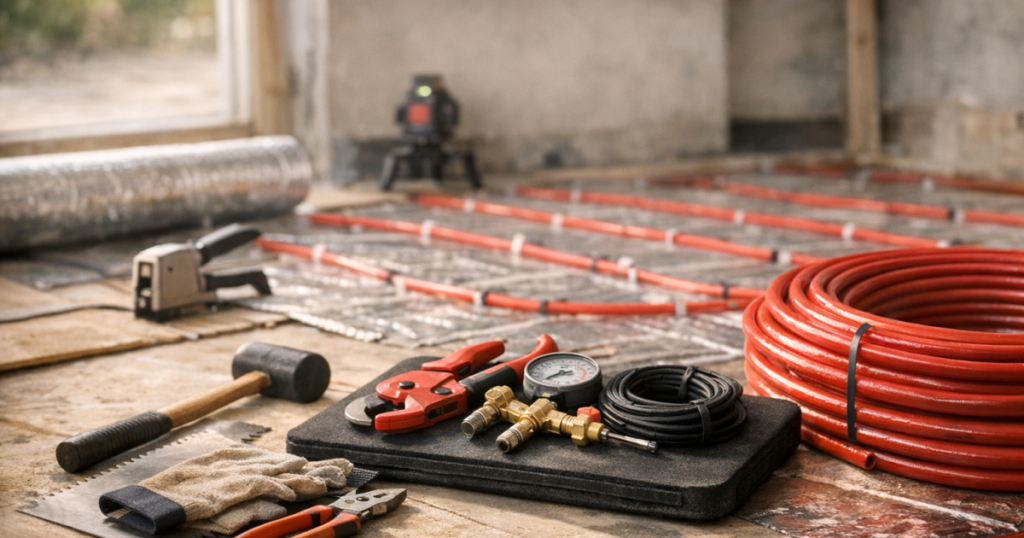
Installing underfloor heating can significantly enhance your home’s comfort, but to ensure a successful installation, you need to have the right tools for underfloor heating installation. From simple hand tools to specialised equipment, each plays a vital role in achieving optimal results.
Basic Tools Required
Every project begins with a toolkit of fundamental instruments. For underfloor heating installations, consider the following:
- Measuring Tape: Accurate measurements are crucial when laying out your heating system. A good measuring tape will help you determine the space needed and avoid unnecessary mistakes.
- Spirit Level: Ensuring that the surface is flat is essential for even distribution of heat. A spirit level will help you achieve this, preventing any future issues with heating.
- Utility Knife: This tool is essential for cutting insulation boards and heating mats to fit your room precisely.
- Drill and Bits: A power drill will be necessary for making holes if you’re installing water-based systems, especially for securing pipes to the floor.
- Adjustable Wrench: If your installation includes connections to a water supply or radiator, an adjustable wrench will be necessary for tightening fittings.
Specialised Tools and Equipment
Beyond the basics, certain specialised tools can significantly enhance your installation process:
- Thermal Imaging Camera: This can be used to check for heat distribution across the floor before the final flooring is installed, ensuring everything is functioning correctly.
- Heat Mat Installation Tool: If you’re using electric underfloor heating mats, this tool will help you secure the mats into place without damaging the heating elements.
- Pipe Bender: For water-based systems, precise bends are required to fit pipes around corners and joints efficiently.
- Pipe Layer Tool: This tool assists in laying out your heating pipes correctly, ensuring that they maintain the intended distance from one another.
Common Mistakes to Avoid
A successful installation not only depends on the tools you use but also on how you deploy them. Here are some common pitfalls to watch out for:
- **Neglecting to double-check measurements:** Always measure twice before cutting materials—mistakes here can be costly.
- **Ignoring manufacturer instructions:** Different systems may have unique installation requirements. Failing to follow them can lead to underperformance or damage.
- **Inadequate testing:** Test the system after installation but before floor finishing to identify any issues.
Step-by-Step Approach
Consider following a structured approach for your installation. Here’s a quick rundown:
- Prepare the area, ensuring the subfloor is clean and level.
- Use your measuring tools to plot the layout of the heating system.
- Run the necessary wiring or plumbing, using your power drill and adjustable wrench as needed.
- Install thermal insulation board to enhance energy efficiency.
- Secure the heating mats or pipes in place using the appropriate tools.
- Test the system before covering it with flooring.
Who Should Consider Underfloor Heating?
Underfloor heating is suitable for various applications, such as:
- New builds seeking efficient heating solutions.
- Renovations where retrofitting traditional radiators may not be ideal.
- Homeowners looking to improve energy efficiency and minimise heating costs.
In Brief
Having the right tools is essential for a successful underfloor heating installation. The basics include measuring tools and cutting instruments, while specialised equipment like thermal imaging cameras and pipe benders can simplify the process significantly. Avoid common mistakes and follow a structured approach for the best results.
Explore Next
- Essential Considerations for Underfloor Heating Installation in Homes
- What to Consider When Buying Underfloor Heating
- Comparing Water-Based and Electric Underfloor Heating Systems
If you’re planning your underfloor heating project and need expert advice, don’t hesitate to get in touch.
Investing in a quality underfloor heating system can drastically improve your home’s energy efficiency. For instance, electric underfloor heating tends to have a faster response time, providing warmth quickly when needed, while water-based systems can retain heat longer, making them ideal for larger spaces. Understanding the nuances of each system can help you determine which one is best for your needs.
When selecting your underfloor heating system, it’s worthwhile to consider the flooring materials being installed over the heating elements. Certain materials, such as tile or stone, conduct heat more effectively, whereas carpets may insulate against the warmth unless specifically designed for use with underfloor systems. Always check the compatibility of your floor coverings for optimal performance.
For added ease during installation, pre-packaged systems are available, which include all necessary components, such as heating mats, thermostat, and sensors. These kits often come with detailed installation guides and may save you time on sourcing individual components, ensuring that you have everything needed for a smooth installation process.
Don’t forget about the importance of pre-installation checks. Before you begin, ensure your electrical system can support the additional load of electric underfloor heating. If you’re opting for a water-based system, inspect for any plumbing concerns or potential leaks that might need addressing prior to installation. Taking these precautions will help you avoid costly repairs or delays later on.