
Comparing Water-Based and Electric Underfloor Heating Systems
Understanding the Basics
When deciding on a heating solution for your home, many homeowners are torn between water-based underfloor heating and electric underfloor heating. Both systems offer unique benefits and drawbacks, catering to different needs and preferences. Understanding the differences between these two options can significantly affect your comfort and energy efficiency at home. If you’re comparing options, focus on what matters most for water-based underfloor heating vs electric underfloor heating.
Overview of Water-Based Underfloor Heating
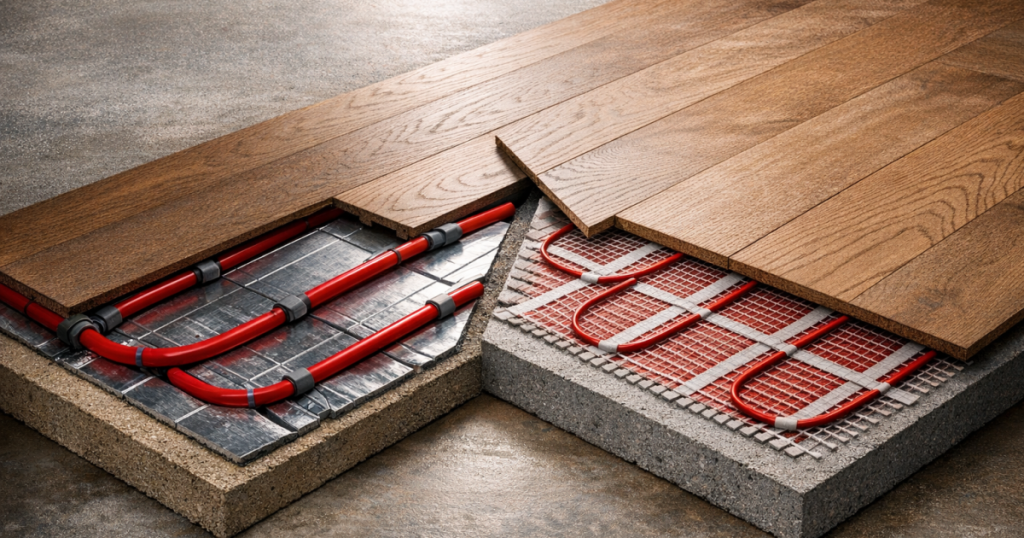
Water-based underfloor heating, also known as wet underfloor heating, circulates warm water through pipes installed beneath the floor surface. This system works by being connected to a boiler or heat pump, making it particularly efficient for larger areas or homes with multiple rooms.
Advantages of Water-Based Systems
- Energy Efficiency: Typically, water-based systems have lower running costs compared to electric systems, which can be a significant benefit in larger homes.
- Consistent Heat Distribution: Water systems provide a more even heat distribution, reducing cold spots within the room.
- Eco-Friendly: If integrated with renewable energy sources like solar panels or heat pumps,they are more sustainable.
Considerations for Water-Based Systems
- Installation Costs: Initial installation can be more costly and complex compared to electric systems.
- Response Time: Water-based systems can take longer to heat up and cool down, making them less responsive than electric options.
- Maintenance: Regular maintenance is important to prevent leaks and ensure optimal performance.
Exploring Electric Underfloor Heating
Electric underfloor heating systems consist of heating cables or mats installed beneath the floor covering. They use electrical resistance to generate heat, making them suitable for a variety of room sizes and types.
Benefits of Electric Systems
- Ease of Installation: Generally easier and quicker to install, which can reduce labour costs and time, especially in small spaces.
- Fast Response Time: Electric systems heat up quickly and can provide immediate warmth, making them ideal for spaces that are used intermittently.
- Lower Initial Costs: Initial costs tend to be lower for electric systems compared to water-based. This aspect can be appealing for budgets.
Drawbacks of Electric Underfloor Heating
- Higher Operating Costs: Long-term running costs can be higher, particularly in larger areas since they use electricity, which may be more expensive than gas or other heating sources.
- Heat Distribution: May not provide as even heat distribution as water-based systems, particularly in larger rooms.
- Dependence on Electric Supply: Requires a stable electrical supply which may be a concern during power outages.
Comparative Summary of Features
Here’s how the two systems stack up against each other:
| Feature | Water-Based Underfloor Heating | Electric Underfloor Heating |
|---|---|---|
| Initial Cost | Higher | Lower |
| Installation Complexity | More complex | Simpler |
| Response Time | Slower | Faster |
| Operating Costs | Lower | Higher |
| Heating Consistency | More consistent | Can be uneven |
| Maintenance | Required | Minimal |
Best Use Cases for Each System
Choosing the best system for your home largely depends on your specific situation:
- Water-Based Systems: Best suited for larger areas like whole houses or open-plan living spaces, particularly if you plan to integrate other heating methods, such as heat pumps.
- Electric Systems: Ideal for smaller rooms such as bathrooms or kitchens, where rapid heating is needed and installation time needs to be kept minimal.
Key Considerations When Choosing a System
Before making your decision, consider these essential factors:
- Space Availability: Assess your home’s layout and how much space you can allocate for an underfloor heating system.
- Budget: Factor in both initial installation costs and ongoing operating costs.
- Usage Patterns: Consider how often you use each room and the desired response times for heating.
- Energy Sources: Evaluate your options for heating sources and whether you can benefit from renewable energy solutions.
Final Thoughts
Both water-based and electric underfloor heating systems have their merits and disadvantages. A water-based system might be more advantageous for larger areas or for those looking to lower long-term heating costs. In contrast, electric systems offer flexibility and quick heating, making them perfect for occasionally-used spaces.
Ultimately, the choice will depend on your particular needs, preferences, and budget. For further assistance in selecting the right underfloor heating solution for your home, consider exploring additional resources on key considerations when buying underfloor heating systems or essential factors for successful installation.
Explore Next
- Best Underfloor Heating Systems for Small Rooms
- Step-by-Step Guide to Underfloor Heating Installation
- Best Underfloor Heating Accessories for Efficient Installation
When it comes to water-based systems, homeowners should also think about the type of flooring they plan to use. Certain flooring materials, such as stone or tile, have excellent thermal conductivity and can enhance the system’s efficiency, while carpets may insulate the heat, resulting in less effective heating. Therefore, selecting the right flooring can play a significant role in the overall performance of the system.
Additionally, consider the option of zoning within your home. With water-based systems, it’s possible to create separate heating zones controlled by individual thermostats. This allows for customised heating in different areas, catering to varying usage patterns and preferences. For instance, you may wish to keep living areas warmer while maintaining a cooler temperature in less-used rooms. This strategic approach not only enhances comfort but can also help to improve energy efficiency.
For electric systems, investing in modern smart thermostats can lead to significant benefits. These devices offer features such as remote control, allowing you to manage heating via a smartphone app, and programmable schedules that align with your daily routine. This adds convenience while optimising energy usage, helping to offset some of the higher operating costs associated with electric systems.