
How to Compare Underfloor Heating Manifolds for Best Performance and Cost
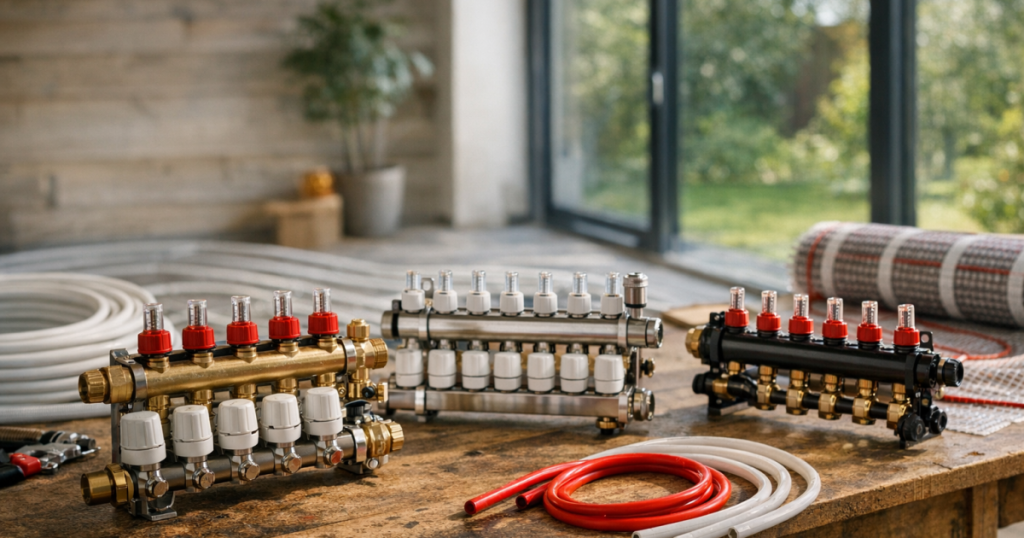
Understanding Underfloor Heating Manifolds
When considering underfloor heating systems, selecting the right manifold is crucial for optimising both performance and cost. These devices distribute hot water to various areas of your home, playing a vital role in ensuring even heating and energy efficiency.
Key Factors to Consider
Before you dive into comparing different models, it’s essential to understand the various factors that can affect your choice.
Explore relevant products and categories
Browse the most relevant category and product options for this guide.

- Material: Manifolds are typically made from either brass or plastic. Brass manifolds tend to be more durable and resistant to heat but can be costlier than plastic options.
- Size: The size of the manifold should align with your heating requirements. Typically, the number of outlets should match the number of circuits in your underfloor heating system.
- Flow Rate: Look for a manifold that offers a high flow rate to ensure efficient heating. This will allow quicker heat distribution throughout your home.
- Integration Capability: If you’re considering zonal controls for improved energy efficiency, verify if the manifold can integrate seamlessly with these systems. Explore our Step-by-Step Guide to Setting Up Zonal Controls for Underfloor Heating Efficiency for more insights.
Performance vs. Cost
Finding the right balance between performance and cost may not be straightforward. High-quality brass manifolds generally outperform cheaper plastic counterparts, but it’s important to assess whether the investment aligns with your specific heating needs. Consider the long-term savings that might arise from improved efficiency—sometimes, spending a little more upfront can lead to significant savings on energy bills in the long run.
Common Mistakes to Avoid
Many homeowners make mistakes that can derail their plans for an efficient heating system. Here are a few to keep in mind:
- Neglecting Insulation: Insufficient insulation can lead to energy loss. Ensure your system is designed with good insulation in mind to maximise efficiency.
- Forgetting About Maintenance: Regular maintenance, including cleaning the manifold, is necessary for optimal performance. Refer to our guide on How to Maintain and Clean Your Underfloor Heating Manifold System Safely.
- Choosing Based on Price Alone: While it’s tempting to go for the cheapest option, always consider the long-term costs and associated benefits.
Who It Suits
Different types of underfloor heating manifolds may suit different homeowners based on specific heating needs. For instance:
- Families with Larger Homes: Invest in high-flow rate brass manifolds that can accommodate multiple circuits efficiently.
- Compact or Flat Smart Homes: Look for models that support zonal heating, which can be a game-changer for energy efficiency and comfort. Check out our article on Best Underfloor Heating Systems for Flats and Compact Homes.
Next Steps
When making your choice, it’s helpful to compare the specific features of various manifold models. Take the time to research and read customer reviews where available to assess the reliability and performance of specific brands. In addition, ensure you verify if your choice complies with local regulations and installation standards. This is key for safety and ensuring the longevity of your system.
The Big Picture
In conclusion, taking the time to compare underfloor heating manifolds thoroughly can lead to a better-performing system and a more comfortable home. Don’t forget to consider installation factors as well—some systems can fit into tight or limited spaces. For guidance on installation, particularly in challenging areas, refer to our article, Installing Underfloor Heating in Tight or Limited Floor Spaces.
Read Next
- How to Troubleshoot Common Issues with Underfloor Heating Manifolds
- How to Install and Connect Pre-Insulated Hoses with Your Underfloor Heating Kit in the UK
- 750mm Pre-Insulated Hoses 11/4 Female Swivel 35mm Pair Review