
How to Prepare Your Floor for Underfloor Heating Installation
Understanding the Importance of Preparation
Find the right products for your project
Browse our range of kits, components and accessories to find the best fit for your installation.
Installing underfloor heating can significantly enhance the comfort and energy efficiency of your home. However, to achieve optimal results, you must prepare your floor adequately. This preparation not only ensures the system operates effectively but also prolongs its lifespan and enhances comfort levels. Here’s how to prepare your floor for underfloor heating installation.
1. Assess Your Current Floor Structure
The first step in preparing your floor is to assess its current structure. You’ll want to identify the type of flooring you have, whether it be concrete, timber or another material, as this will affect the installation method. If your floor is uneven or damaged, consider making necessary repairs before proceeding. A structurally sound base will facilitate the smooth operation of underfloor heating.
2. Consider Insulation
Proper insulation is crucial for enhancing the performance of your underfloor heating system. Insulation prevents heat loss, ensuring energy efficiency. Depending on your existing flooring, you might need to add insulation boards below the heating system. If your property has solid concrete floors, insulation boards can significantly improve efficiency. For further insights, check our guide on essential considerations for underfloor heating installation.
3. Choose the Right Heating System
Choosing between wet and electric underfloor heating can impact both installation and performance. If you have existing floor structures that may not support the higher heat levels of electric systems, wet systems may be more suitable. Take time to review wet underfloor heating vs electric underfloor heating for a comprehensive comparison. This can guide your choice based on your home’s specific needs.
4. Prepare the Subfloor
Once you have determined the flooring type and selected the heating system, you must ensure the subfloor is clean and level. Sweep away any dust, debris, or loose particles that may interfere with the installation. If your subfloor is not level, consider using a levelling compound to create a flat surface. Uneven floors can cause hot spots or inefficiencies in heat distribution.
5. Install the Heating Mat or Pipes
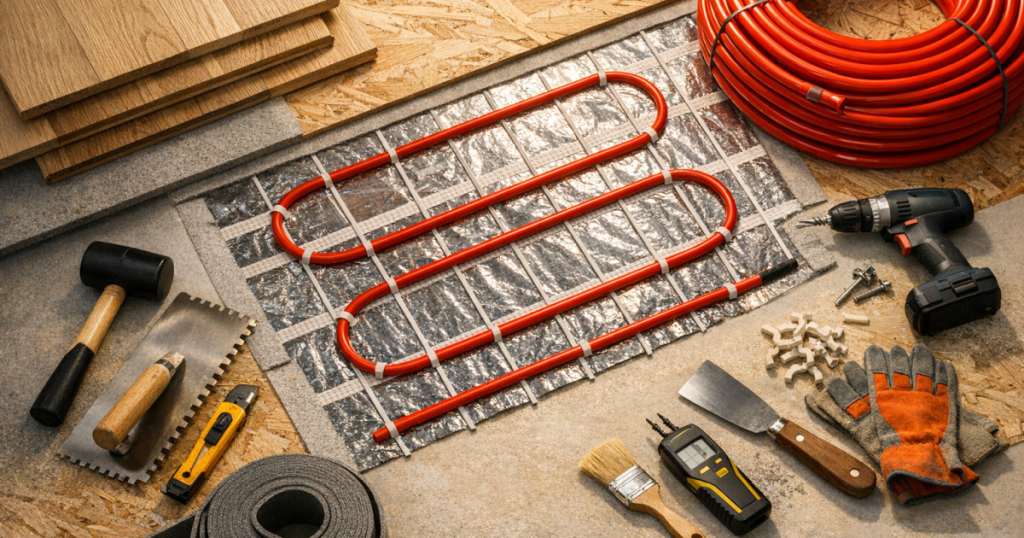
After the subfloor is adequately prepared and insulated, you can install the underfloor heating system. Follow the manufacturer’s guidelines for laying down electric mats or pipes for wet systems. Pay careful attention to the spacing and layout, as this will dictate how effectively heat is distributed across your floor. In-depth installation steps are available in our step-by-step guide to underfloor heating installation.
6. Conceal and Protect the Installation
Once your heating system is laid, it’s essential to protect it before laying down the final floor covering. Some systems may require a layer of self-levelling compound for protection. This layer helps guard against moisture and physical damage during the installation of flooring materials like tiles, laminate, or carpet. Ensuring proper coverage is vital for longevity and effective performance.
7. Choose the Right Flooring Material
When it comes to final flooring choices, opt for materials that conduct heat well. Ceramic and stone tiles are excellent choices for underfloor heating; they absorb and radiate heat effectively. Timber and laminate can work, but ensure they’re rated for use with underfloor heating. For optimal choices, you can refer to our article on choosing the right underfloor heating system for your home.
8. Final Checks and Testing
Before you commence using your underfloor heating system, it’s essential to conduct a final check. Ensure that your thermostat and heating controls are working correctly. Run the system at a low temperature for a few hours to ensure everything is functioning smoothly without any unusual noises or issues.
Conclusion
Preparing your floor for underfloor heating installation is a crucial step in the process. By carefully assessing your current floor structure, choosing the right heating system, and ensuring proper installation, you can enjoy the many benefits of this efficient heating method. If you have additional questions or require guidance tailored to your specific needs, don’t hesitate to contact us for expert advice.
Related reading
- How to Evaluate Underfloor Heating Systems for Different UK Homes
- Essential Factors for Successful Underfloor Heating Installation
- Key Considerations When Buying Underfloor Heating Systems