
Comparing Electric and Water Underfloor Heating Systems
Understanding the Basics
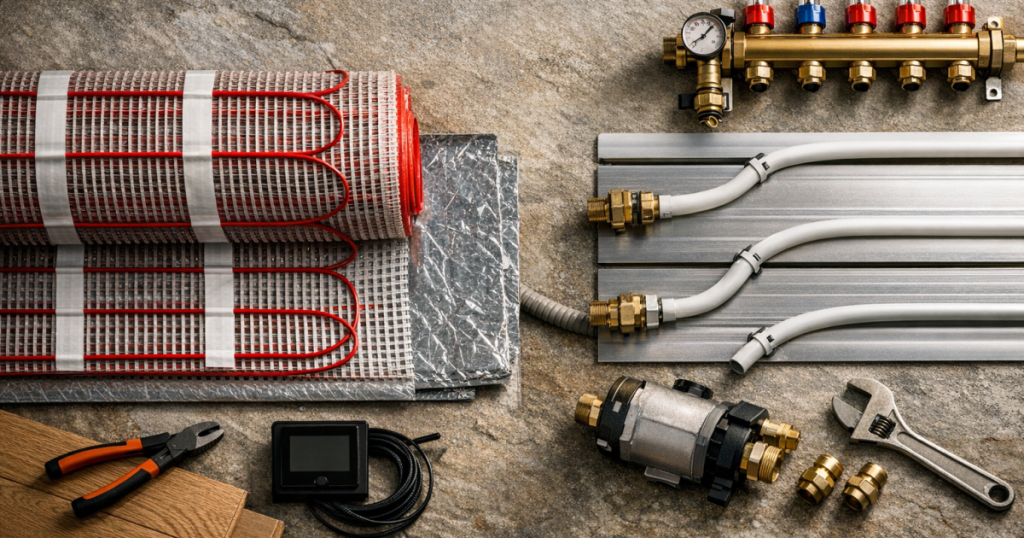
When considering electric underfloor heating vs water systems, it is essential to understand how both systems operate. Electric underfloor heating uses electrical cables or mats installed beneath the floor surface, whereas water systems circulate warm water through pipes to provide heat.
At a Glance: Key Differences
- Installation: Electric systems are usually easier and faster to install compared to water systems.
- Running Costs: Electric systems can be more expensive to run, especially in larger areas.
- Installation Complexity: Water systems typically require a more complex setup, including a boiler.
- Response Time: Electric systems heat up quickly, whereas water systems may take longer to warm up.
Electric Underfloor Heating Systems
Electric underfloor heating systems are often considered for their simplicity and ease of installation. They consist of heating cables or mats that can be placed directly beneath the flooring. This type of system is ideal for retrofit scenarios where traditional heating methods may not be adequate.
Pros of Electric Underfloor Heating
- Quick Installation: Electric systems can be installed in a day, making them suitable for quick renovations.
- Low Maintenance: Once installed, these systems typically require little ongoing maintenance.
- Flexible Thermostat Control: Electric systems allow for easy use of programmable thermostats, offering precise control over heating.
Cons of Electric Underfloor Heating
- Higher Operating Costs: Running costs can be significant, particularly in poorly insulated homes.
- Less Efficient for Large Areas: For larger spaces, electric systems may not provide the best heating solution.
Water Underfloor Heating Systems
Water-based underfloor heating systems rely on a network of pipes that circulate warm water. This system is often more suitable for larger areas and new builds due to the more invasive installation process required.
Pros of Water Underfloor Heating
- Lower Running Costs: These systems can operate more efficiently over time, especially when linked with a gas boiler or heat pump.
- Even Heat Distribution: The large surface area heated by the water provides consistent warmth throughout the room.
- Environmentally Friendly: When paired with renewable energy sources, water systems can be a more sustainable choice.
Cons of Water Underfloor Heating
- Complex Installation: Requires extensive work during installation, including plumbing and potentially a new boiler.
- Longer Warm-up Time: Water systems have a slower response time, taking longer to warm up when turned on.
Comparative Analysis: Which One Is Right for You?
Choosing between electric and water underfloor heating systems depends significantly on your specific needs, the size of the area to be heated, and your long-term energy costs. If speed and ease of installation are priorities, electric systems may be the ideal choice. However, for larger spaces where cost-efficiency over time is paramount, water systems often shine.
Key Considerations When Selecting a System
- Space Size: Consider the size of the area needing heating. Electric systems can struggle with large spaces while water systems excel.
- Insulation: Check how well your space is insulated. A well-insulated area could benefit from electric heating.
- Installation Costs: Factor in your budget for initial installation versus long-term operating costs.
- Energy Source: The type of energy source available in your area may influence the efficiency of water systems.
Buying Guidance
When considering a new heating system, ensure you research materials and components. Quality components, such as thermostats and mats for electric systems or high-grade pipes for water systems, can greatly affect performance and longevity. For more information on the best materials for underfloor heating installation, consult our comprehensive guide.
Further Reading
- Underfloor Heating Benefits
- Essential Considerations When Choosing Underfloor Heating Systems
- Underfloor Heating Components
If you have more specific questions about your heating needs, feel free to contact us for expert advice.
Another significant factor to consider is the type of flooring you plan to use. Electric underfloor heating systems are compatible with most flooring types, including tiles, vinyl, and laminate; however, it’s crucial to check the manufacturer’s guidelines for each flooring material to avoid any potential issues. Conversely, water systems are typically best suited for tiled or stone floors, which can efficiently conduct heat, ensuring optimal performance.
In terms of long-term considerations, investing in a good thermal insulation layer beneath your underfloor heating can enhance efficiency significantly for both systems. Insulation not only reduces heat loss but also allows the systems to reach desired temperatures faster. In addition, it is wise to incorporate a heat loss calculation when selecting your system, as this will help you gauge the necessary output for the space to be effectively heated.
- Control Options: Both systems can integrate with smart home technology, allowing you to control the temperature remotely. Smart controls can be particularly beneficial for water systems that take longer to heat up, enabling pre-set adjustments.
- Heating Zones: If your home has varying heating needs across different areas, consider a system that allows for zoning. This will enable separate temperature controls for different rooms, maximising comfort and efficiency.